Swedish Lapland in Winter: 7 Honest Days of Aurora, Silence, and Slow Travel
Swedish Lapland in winter is not a postcard fantasy. It’s weeks of polar night, temperatures that crack wood, and silence so complete you hear your own pulse. The aurora might show up, or it might not. What’s guaranteed: cold that resets your baseline for discomfort, darkness that bends time, and days so slow they feel like a different species of living. If you’re looking for a checklist trip, go somewhere else. If you want to know what it feels like to stand still in the Arctic while the sky occasionally catches fire, keep reading.
TL;DR
- Best time: December to February for polar night and peak aurora odds; late September and March for milder cold and some daylight.
- Base camp: Kiruna for amenities and transport links, Abisko for darker skies and better aurora statistics.
- Real costs: 12, 000-18, 000 SEK per person for seven days including lodging, food, one tour, and train from Stockholm.
- What to expect: Two to three hours of blue twilight at midday during polar night, -15°C to -30°C, and long stretches of waiting for weather to cooperate.
- Pack: Wool base layers, insulated boots rated to -40°C, headlamp, thermos, and low expectations for ticking off sights.
Why Swedish Lapland in winter asks more of you than summer
Summer Lapland is accessible. The midnight sun turns night into a technicality, temperatures hover around 15°C, and you can hike, paddle, and drive without consulting survival checklists. Winter Lapland is the opposite. The sun disappears for weeks. Your fingers go numb filling a thermos. Your plans hinge on whether the clouds clear, whether the bus runs, whether you remembered to charge your headlamp.
This is not a complaint. It’s the terms of entry. Swedish Lapland in winter rewards people who can sit still, wait, and find satisfaction in small things: the way snow squeaks underfoot at -25°C, the blue glow at midday that passes for daylight, the specific silence of a forest locked in frost. If you need constant stimulation, winter above the Arctic Circle will frustrate you. If you’ve been moving too fast for too long, it might recalibrate you.
The official Visit Sweden Lapland overview will tell you about the Icehotel, the aurora, and Sami culture. All true. But the real story is slower: it’s the 17-hour night train from Stockholm, watching forests thicken and thin, lakes freeze solid, the last electric lights fade into snow and spruce. It’s arriving in Kiruna at 8 a.m. under stars because the sun won’t show for another three hours, and even then, only as a faint glow.
Polar night is not romantic until the third day
Polar night sounds poetic until you’re living in it. In late December, Kiruna gets roughly two hours of nautical twilight, a deep blue wash on the southern horizon, and then darkness. Your body doesn’t understand. You wake up disoriented. You eat lunch by headlamp. You lose track of time because there’s no sun to anchor the day.
By day three, something shifts. You stop fighting it. You start moving slower, sleeping when you’re tired instead of when the clock says to, drinking coffee at 3 p.m. in full darkness without guilt. The darkness stops feeling oppressive and starts feeling like privacy. You’re off the grid, not because you’re disconnected from Wi-Fi, but because the normal rules of daylight and productivity don’t apply.
Where to base yourself: Kiruna vs. Abisko vs. smaller villages
Choosing a base in Swedish Lapland in winter comes down to a trade-off: amenities versus darkness. Kiruna is a functional mining town of 18, 000 people. It has supermarkets (ICA, Coop), a handful of restaurants, the striking Kiruna Church, and regular bus and train connections. The sky is dark enough to see the aurora from the edge of town, but streetlights and mine floodlights add a low haze. If you want easy access to groceries, backup plans when weather turns, and a place that feels lived-in rather than packaged for tourists, Kiruna works.
Abisko is 100 km west, a tiny village inside Abisko National Park with maybe 100 year-round residents. It has one small grocery counter, a handful of lodges, and the Aurora Sky Station, a chairlift-accessed observatory at 900 meters that claims some of the clearest skies in Sweden. The claim holds up. Abisko sits in a rain shadow created by the surrounding mountains, so clouds often part here when the rest of Lapland is socked in. If your main goal is aurora photography and you’re comfortable with isolation, Abisko is the better bet. Book Abisko aurora lodges early; options are limited and fill up by October for peak winter weeks.
Smaller villages, Jukkasjärvi (home of the Icehotel), Riksgränsen (a ski resort on the Norwegian border), Vittangi, offer even deeper quiet but require a car or prearranged transport. Jukkasjärvi is 17 km from Kiruna and connected by local bus, making it a decent compromise if you want the Icehotel experience without total isolation.
Transport: the night train is part of the experience
Flying Stockholm to Kiruna takes 90 minutes and starts around 600 SEK if you book months ahead. You’ll save time. You’ll also miss the transition, the way the landscape empties out north of Gävle, the way frozen lakes multiply, the way you wake up in your couchette somewhere near the Arctic Circle under a sky you’ve never seen from your apartment in Södermalm.
The SJ night train leaves Stockholm Central around 6 p.m. and arrives in Kiruna at 11 a.m. the next day. A bed in a six-berth couchette costs 800-1, 000 SEK; a private sleeper cabin runs 1, 500-2, 000 SEK. Bring snacks, a book, and low expectations for sleep if you’re in a shared compartment. The train rocks. Swedes are quiet but not silent. You’ll wake up every time the train stops to load timber or let a freight pass. By morning, you’ll feel like you’ve traveled farther than 1, 200 km.
What seven slow days actually look like in Swedish Lapland in winter
Here’s an honest itinerary for a week based in Kiruna with a few nights in Abisko. No fluff, no “must-see” language, just what the days feel like when you’re not rushing.
Day 1: Arrival and adjustment
You step off the train in Kiruna under stars. It’s 11 a.m. The air is so cold it stings the inside of your nose. Check into your lodging, Kiruna winter hotels range from functional (Scandic Kiruna, around 900 SEK/night) to boutique (Camp Ripan, with Northern Lights wake-up service, 1, 400 SEK/night). Spend the afternoon walking the town center, buying groceries, adjusting to the twilight. The Kiruna Church, a 1912 wooden structure often listed among Sweden’s most beautiful buildings, is worth 20 minutes. Eat an early dinner. By 6 p.m. it’s been dark for hours and your body thinks it’s midnight. Sleep.
Day 2-3: Settling into the rhythm, first aurora attempt
Wake up when you wake up. Make coffee. If the sky is clear, take the 10 a.m. bus to Abisko (Länstrafiken Norrbotten, around 100 SEK one-way, 90 minutes). Walk the Abisko Canyon trail, a 3 km loop through frozen birch forest and along the Abiskojåkka River. The light is blue, the silence is absolute, and you’ll see ptarmigan tracks in the snow.
Return to Kiruna by afternoon. Check the aurora forecast on the Swedish Institute of Space Physics site. If the Kp index is 2 or higher and skies are clear, you have a decent chance. You can book a guided tour (1, 500-2, 500 SEK, includes transport, hot drinks, and someone who knows where clouds are thinnest), or you can rent a car, drive 15 km out of town, park, and wait. Bring a thermos of coffee, a headlamp with a red filter, and a folding chair. Dress warmer than you think you need. At -25°C, you’ll be standing still for an hour or more. The aurora doesn’t punch a clock.
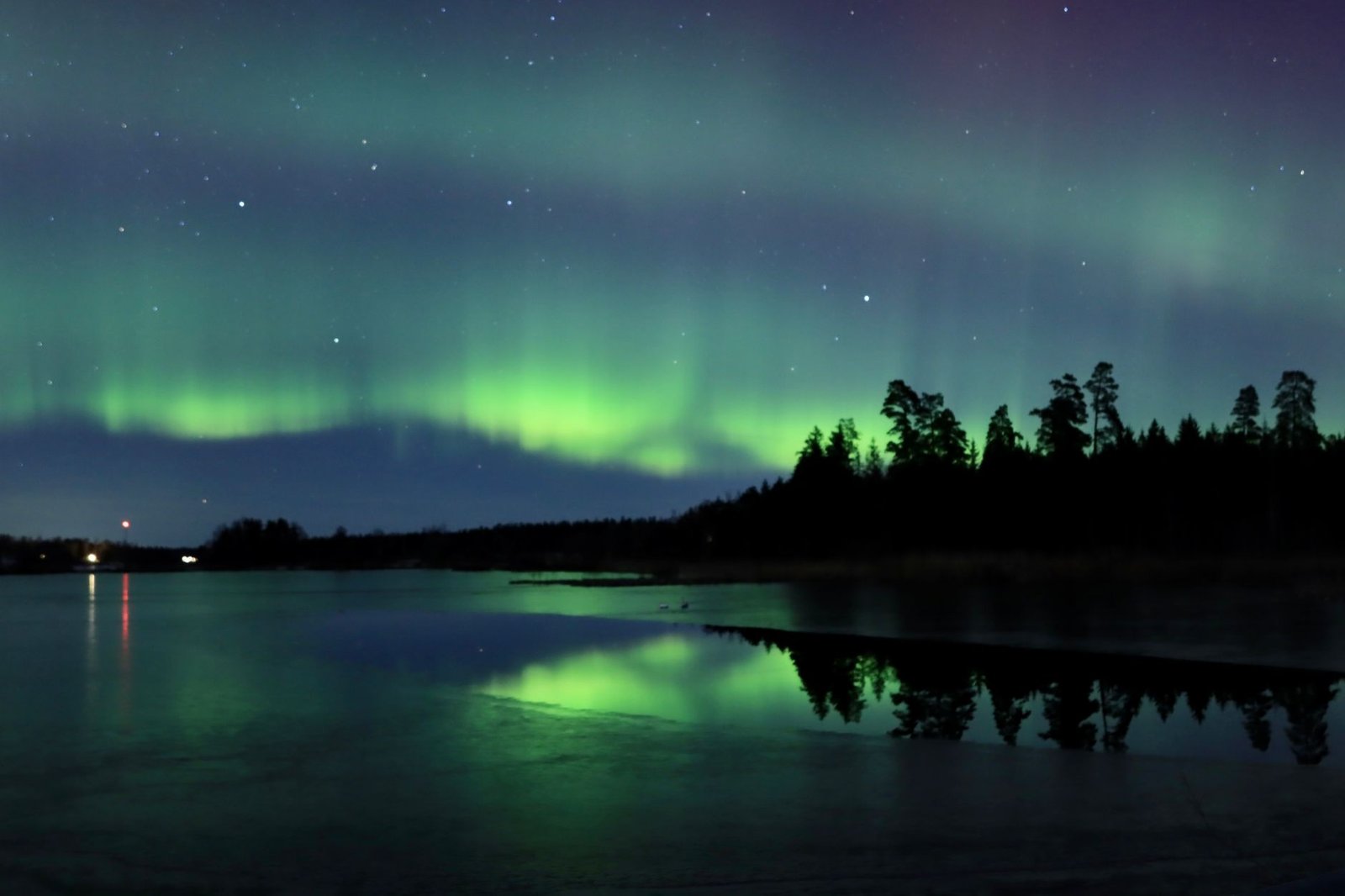
If you see it, it probably won’t look like the photos. It starts as a pale green glow, a cloud that doesn’t move like a cloud. Then it might ripple, fold, stretch into curtains. Sometimes it pulses. Sometimes it just sits there. Phone cameras won’t capture it well without a tripod and manual settings. That’s fine. Watch it with your eyes.
Day 4: Icehotel day trip
Take the 10 a.m. bus to Jukkasjärvi (30 minutes, around 50 SEK). The Icehotel reopens every December, rebuilt from 5, 000 tons of Torne River ice and snow. Day tickets cost 395 SEK and get you a self-guided tour of the art suites, rooms carved by artists from Sweden, Japan, and elsewhere, each one different, each one melting by April. The ice bar serves drinks in ice glasses (150 SEK for a vodka shot, gimmicky but part of the deal). The adjacent Icehotel 365, a year-round permanent structure kept frozen by solar power, offers a comparison: same concept, less romance, more engineering.
Eat lunch at the on-site restaurant (reindeer stew, Arctic char, vegetarian root vegetable soup, expect 200-300 SEK). Walk the frozen Torne River. Bus back to Kiruna by 4 p.m., which is already full night.
Day 5-6: Move to Abisko, commit to aurora waiting
Check out of Kiruna, take the morning train or bus to Abisko Turiststation (STF’s mountain lodge and hostel, 700-1, 100 SEK/night depending on room type). The lodge has a sauna, a restaurant, and a boot-drying room that smells like wet wool and wood smoke. Book a night at the Aurora Sky Station (chairlift ride + guided sky watch, around 600 SEK). The lift runs even in -30°C. At the top, you’re above the valley inversion layer, warmer, clearer, darker. Guides serve cloudberry tea and explain solar wind. You stand on a wooden platform, neck craned, waiting. If the aurora comes, it’s often stronger and faster here than at ground level.
Spend the next day cross-country skiing the Abisko trail network (rentals at Abisko Mountain Lodge, 300 SEK/day) or just walking. The national park in winter is silent in a way that southern Sweden never is. No birds. No wind if you’re lucky. Just your breath and the creak of snow.
Day 7: Return
Morning train back to Kiruna, then the overnight train south to Stockholm. You’ll sleep better this time. You’ve recalibrated to slow time, and the return to normal speed will feel jarring. Let it.
Practical details: costs, packing, and what nobody mentions
A week in Swedish Lapland in winter costs 12, 000-18, 000 SEK per person if you’re careful. Break it down: 600-1, 200 SEK per night for lodging (hostels and STF huts on the low end, hotels on the high end), 300-500 SEK per day for food if you self-cater or eat simple meals, 1, 500-3, 000 SEK for one guided tour (dogsledding, aurora, snowmobile), and 2, 000-3, 000 SEK for return train tickets from Stockholm. Flights add cost but save time. Alcohol is expensive everywhere in Sweden; a beer at a Kiruna restaurant runs 75-90 SEK.
Pack wool base layers (top and bottom), a down parka rated to at least -30°C, insulated boots (Sorel, Lundhags, or similar, rated to -40°C), wool socks, a neck gaiter, a wool hat that covers your ears, and insulated gloves plus thin liner gloves for phone use. Bring a headlamp, you’ll use it daily. A thermos keeps coffee drinkable for hours. Sunglasses matter; even in low light, snow glare during the midday blue hour can strain your eyes.
What nobody mentions: your phone battery dies fast in extreme cold. Keep it inside your jacket. Zippers freeze; wiggle them gently, don’t force. If you wear glasses, they’ll fog every time you step inside. Your nose will run constantly outside; bring tissues. The air is so dry your lips will crack unless you use balm hourly.
Sustainability angle: Lapland’s fragility and what you owe it
Swedish Lapland is not a theme park. It’s home to the Sami people, Europe’s only Indigenous population, who have herded reindeer here for thousands of years. Tourism brings income but also pressure, snowmobile noise disturbs herds, off-trail skiing damages lichen that takes decades to regrow, and the Icehotel’s water use has sparked local debate.
Travel lighter. Book Lapland Sami cultural experiences run by Sami operators, not intermediaries. Stay on marked trails. If you rent a snowmobile, follow the guide’s route exactly. Support the STF huts and lodges that operate on low-impact principles. Eat local (reindeer, Arctic char, cloudberries) when you can; it’s lower-footprint than imported vegetables trucked from southern Europe.
The Swedish Environmental Protection Agency has clear guidelines for minimizing impact in sensitive areas. Read them. Lapland will outlast your visit, but only if visitors treat it like a place people live, not a backdrop.
When the aurora doesn’t show: what else fills the time
You might spend seven days in Abisko and see nothing but clouds. It happens. The aurora is not a guaranteed product; it’s a probabilistic event tied to solar wind, magnetic field orientation, and whether the sky is clear. If you’ve built your entire trip around seeing it, you’ve set yourself up for disappointment.
So: what else? Dogsledding tours run out of Kiruna and Jukkasjärvi (2, 500-4, 000 SEK for a half-day, longer multi-day trips available). You stand on the runners, the dogs pull hard, and the silence when you stop is total. Ice fishing on frozen lakes, locals drill holes, drop a line, and wait. You can join a guided trip (around 1, 200 SEK) or rent gear and try yourself. Snowshoeing in Abisko National Park costs nothing but boot rental (200 SEK/day). The Nuolja trail climbs 400 meters to a summit view; in winter, it’s a four-hour round trip in deep snow.
Or you do nothing. You read. You sit in the sauna at your lodge, then step outside naked into -20°C air for thirty seconds, then back into the heat. You cook a slow dinner. You watch the blue hour arrive and fade. You learn that boredom, in a place this quiet, is not a problem to solve.
Key Takeaways
- Swedish Lapland in winter is built around waiting, for the aurora, for the brief midday light, for weather to shift. If you can’t sit still, pick a different season.
- Abisko has statistically better aurora odds than Kiruna thanks to its microclimate, but Kiruna offers more infrastructure and flexibility when plans change.
- Budget 12, 000-18, 000 SEK per person for seven days, including the night train from Stockholm, modest lodging, self-catered meals, and one guided experience.
- Pack for -30°C: wool base layers, insulated boots rated to -40°C, a down parka, and a headlamp you’ll use every single day.
- Respect the land and the Sami communities who live here year-round, book Indigenous-run tours, stay on trails, and remember that Lapland is not a stage set.
References
Frequently Asked Questions
When is the best time to see the aurora in Swedish Lapland?
Late September through late March offers the longest dark windows, but December through February gives you polar night in places like Abisko, up to 20 hours of darkness per day. Cloud cover matters more than season; Abisko averages 70% clear nights in winter thanks to the rain shadow effect. Book at least three nights to improve your odds.
How cold does Swedish Lapland get in winter?
Expect -15°C to -30°C in January and February, with occasional dips to -40°C in Kiruna and further inland. Coastal areas like Luleå stay milder, around -10°C. Dry cold feels less brutal than humid cold, but you'll need layered wool base layers, insulated boots rated to -40°C, and a proper down parka.
What does polar night actually mean for daily life in Lapland?
In Kiruna and Abisko, the sun doesn't rise above the horizon from early December to mid-January. You get a few hours of blue twilight around midday, then darkness. Locals use headlamps for morning walks, and many hotels keep breakfast service until 11 a.m. Your circadian rhythm will protest for the first two days.
How much does a week in Swedish Lapland cost in winter?
Budget 12, 000-18, 000 SEK (1, 100-1, 650 EUR) per person for seven days: 600-1, 200 SEK per night for mid-range lodging, 300-500 SEK daily for groceries or simple meals, 1, 500-3, 000 SEK for one guided aurora or dogsledding tour, and 2, 000-3, 000 SEK for return trains from Stockholm to Kiruna. Self-catering and public transport keep costs down.
Can you see the aurora from Kiruna town center?
Yes, if the sky is clear and the Kp index is above 2. Light pollution is minimal compared to southern Sweden, but walking 15 minutes out of town or taking the free ski bus to Abisko improves your view. The Esrange Space Center, 40 km east, offers near-total darkness but requires a car.
Is Abisko really better for northern lights than Kiruna?
Statistically, yes. Abisko sits in a microclimate rain shadow created by surrounding mountains, giving it fewer clouds than Kiruna. The Aurora Sky Station at Abisko National Park logs clear skies roughly 70% of winter nights. Kiruna is cloudier but offers more lodging and dining options.
Do I need to book aurora tours, or can I see them on my own?
You can see them on your own if you have warm clothing, a headlamp, and patience. Tours provide transport to dark-sky sites, weather forecasting, and hot drinks, which matters when you're standing outside at -25°C for two hours. If you're staying in Abisko, the chairlift to the Sky Station runs nightly and costs around 600 SEK.
What should I pack for Swedish Lapland in winter besides warm clothes?
Bring a headlamp with red-light mode (preserves night vision for aurora watching), a thermos for hot coffee, wool socks (two pairs), hand warmers, lip balm, and a camera tripod if you plan to photograph the lights. Sunglasses are useful during the brief midday twilight when snow glare is intense.
Are there vegetarian or vegan food options in Lapland?
Kiruna and Jukkasjärvi have supermarkets (ICA, Coop) with standard vegetarian staples. Restaurant menus lean heavily on reindeer, Arctic char, and game, but most places offer at least one vegetarian dish. Self-catering is easier; bring dried goods if you have specific dietary needs, as selection thins out in smaller villages.
How do I get to Swedish Lapland from Stockholm?
The night train from Stockholm Central to Kiruna takes roughly 17 hours and costs 800-1, 500 SEK one-way depending on how far ahead you book. SJ runs daily sleeper services with couchettes and private cabins. Flying Stockholm-Kiruna takes 90 minutes and starts around 600 SEK if booked early, but you miss the slow transition through Sweden's forests and frozen lakes.
What is there to do in Lapland besides aurora hunting?
Dogsledding, snowmobiling, cross-country skiing, and ice fishing fill the daylight hours. The Icehotel in Jukkasjärvi reopens each December. Sami cultural experiences, reindeer herding demonstrations, joik singing, visits to lavvu tents, are available through operators like Nuolja Sami Experience. Abisko National Park has marked winter trails for snowshoeing.
Is it safe to drive in Swedish Lapland in winter?
Roads are plowed and salted, but black ice, snowdrifts, and wandering reindeer are real hazards. Rent a car with studded winter tires (legally required December 1 to March 31) and drive slowly. If you're not confident in winter driving, stick to trains and local buses; Länstrafiken Norrbotten runs routes between Kiruna, Abisko, and Riksgränsen.
Can I visit the Icehotel without staying overnight?
Yes. Day visits cost around 395 SEK and include a self-guided tour of the art suites, ice bar, and ice chapel. The hotel is rebuilt every November from Torne River ice and melts in April. Overnight stays in cold rooms start at 2, 500 SEK per person and include thermal sleeping bags, morning sauna, and breakfast.
What's the difference between Kiruna and Abisko for a base?
Kiruna is a small mining town with supermarkets, restaurants, and the Kiruna Church. It's a practical hub but not particularly scenic. Abisko is a tiny village inside a national park, quieter, darker skies, better aurora odds, but almost no shops. Choose Kiruna for amenities, Abisko for nature and silence.
How long does the blue twilight last during polar night?
In late December around Kiruna, you get roughly two to three hours of nautical twilight, a deep blue glow on the southern horizon, between 10 a.m. and 1 p.m. It never brightens to full daylight. By late January, civil twilight returns, and you gain about 30 minutes of usable light each week.
Do Swedish Lapland hotels have saunas?
Most do. Sauna culture is strong across Sweden, and winter lodges in Lapland almost always include a wood-fired or electric sauna. Some offer lakeside saunas where you can cut a hole in the ice for a polar plunge. If your accommodation doesn't list a sauna, ask, it's often shared and not advertised prominently.
What's the likelihood of seeing the aurora on a single night?
Roughly 30-50% on any given clear night in Abisko during solar maximum years, lower during solar minimum. Aurora activity follows the 11-year solar cycle; 2024-2026 is a peak period. Cloud cover is the bigger variable. Three consecutive nights give you an 80%+ chance of at least one sighting if you're in Abisko.
Are there ATMs and card payment options in Lapland?
Sweden is nearly cashless. Cards (Visa, Mastercard) are accepted everywhere, including small tour operators and village cafés. ATMs exist in Kiruna and Gällivare but are rare in Abisko. Bring a backup card in case one gets demagnetized by cold; keep cards inside your jacket, not in a wallet exposed to -30°C.
Can I see reindeer in the wild, or only on farms?
You'll see semi-wild reindeer along roadsides, especially Route 98 between Kiruna and Abisko. They're herded by Sami families but roam freely across huge areas. Drive cautiously at dawn and dusk. For close interaction and cultural context, book a visit to a Sami reindeer camp; several operate near Kiruna and offer feeding and sledding experiences.
What does "slow days" mean in the context of Lapland winter?
It means accepting the rhythm of short daylight, long darkness, and weather that dictates your plans. You might spend an afternoon reading by a fire, waiting for clouds to clear. Meals stretch longer. Walks are shorter but more intentional. It's the opposite of checklist tourism, you're there to experience cold, silence, and waiting, not to tick off ten sights.
Is Swedish Lapland suitable for families with young children?
Yes, if you prepare them for extreme cold and long dark hours. Dogsledding and snowmobiling tours often have age minimums (7-12 years depending on operator). Kiruna has indoor play areas, and the Icehotel fascinates kids. Pack extra layers, hand warmers, and plan shorter outdoor sessions. Many families base in Kiruna for amenities and do day trips to Abisko.
What's the mobile network coverage like in Lapland?
Telia and Tele2 offer solid 4G coverage in Kiruna, Abisko, and along the E10 highway. Coverage drops in the national park backcountry and between villages. Download offline maps and aurora forecast apps before you leave cell range. STF huts and some remote lodges have Wi-Fi, but don't count on it.
How do I find out if the aurora will appear tonight?
Check the Swedish Institute of Space Physics aurora forecast (irf.se) or the NOAA Space Weather Prediction Center for Kp index. Kp 2-3 is often enough in Abisko; Kp 4+ is visible even in Kiruna. Local hotels and tour operators monitor forecasts and will wake you if lights appear. Apps like "My Aurora Forecast" send push notifications.
What's the etiquette around photographing Sami people or reindeer herding?
Always ask permission before photographing people, especially during cultural ceremonies or in traditional dress. Reindeer herding is work, not a tourist show, if you encounter herders moving animals, stay in your car and keep quiet. Book a formal cultural experience if you want photos; operators will explain what's appropriate.
Can you swim or bathe outdoors in Lapland winter?
Yes, in heated outdoor pools or after a sauna. Kiruna's public pool, Kiruna Simhall, has an outdoor section open year-round. Some wilderness lodges have wood-fired hot tubs. Ice swimming (cold plunge through a hole cut in a frozen lake) is common after sauna; locals do it, but ease in, 30 seconds is plenty for beginners at -20°C water temperature.
What happens if the weather is too bad to do anything outside?
You read, cook, sauna, and wait. Lapland winter teaches patience. Bring books, download films, or learn to enjoy doing nothing. Cafés in Kiruna (like Café Safari) are cozy refuges. If you're in a cabin, split firewood, bake bread, watch the snow. Bad weather is part of the experience, not a failure of your trip.